

NEWS & EVENTS

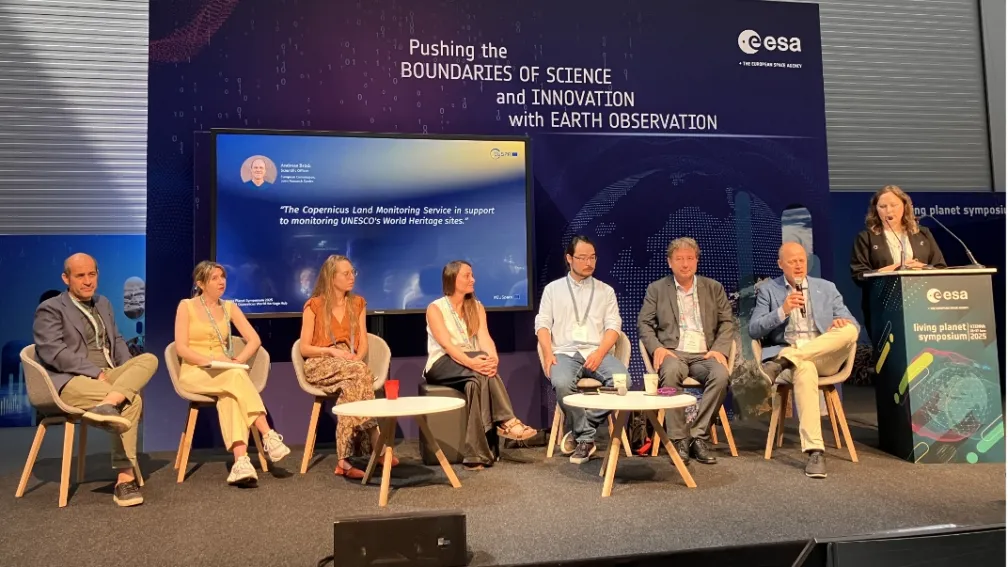
During the Living Planet Symposium 2025 in Vienna, EUSPA hosted an Agora session to present the World Heritage Hub concept. The session highlighted the ongoing efforts to establish a comprehensive single access point for Copernicus data and services, specifically designed for the global monitoring and protection of cultural and natural heritage.
The European Commission organised the General Assembly in Venice this year to bring together the EU ​Space Networks. In a joint presentation, EUSPA introduced the upcoming Copernicus World Heritage ​Hub and highlighted how Earth observation (EO) and satellite navigation are being used to monitor, preserve, and protect vulnerable sites.
Image
Copernicus for Cultural Heritage

As climate change and environmental threats put Europe’s cultural landscapes at risk, Copernicus provides freely accessible Earth observation data, such as high-resolution imagery and ground-motion monitoring, to track landscape dynamics, detect geohazards, and support conservation of heritage sites.

Image
Revealing and Safeguarding Heritage from Space

Copernicus data helps archaeologists uncover ancient landscapes and monitor threats to heritage sites. For example, Sentinel‑1 SAR revealed subtle ground displacements at UNESCO sites in Cyprus after a 2015 earthquake, while comparisons of pre‑ and post‑event imagery support conflict damage assessments.

Image
Monitoring Forest Health in World Heritage Landscapes

Forests overlapping with World Heritage landscapes are increasingly at risk from fires, pests, and climate change. Copernicus satellites track vegetation stress, deforestation, and fire damage, providing data to guide their sustainable management and protection.